Sunscreen: Your Ultimate Guide to Healthy, Protected Skin
Why Sunscreen Should Be a Daily Essential
When it comes to skincare, no product is more important than sunscreen. Whether you’re heading to the beach, commuting to work, or simply sitting near a window, your skin is constantly exposed to ultraviolet (UV) rays. These invisible rays can lead to premature aging, sunburn, dark spots, and even increase the risk of skin cancer.
Using sunscreen every day is one of the easiest and most effective ways to maintain healthy, youthful-looking skin.
What Is Sunscreen?
Sunscreen is a skincare product designed to protect your skin from harmful UV radiation. It creates a protective barrier that either absorbs or reflects UV rays before they can damage your skin.
Most dermatologists recommend using a broad-spectrum sunscreen with SPF 30 or higher every day.
Benefits of Wearing Sunscreen Daily
1. Prevents Sunburn
Sunburn damages the skin’s outer layer, causing redness, irritation, peeling, and discomfort. Sunscreen helps shield your skin from these harmful effects.
2. Slows Premature Aging
UV exposure breaks down collagen and elastin, leading to wrinkles, fine lines, and sagging skin. Daily sunscreen helps preserve your skin’s youthful appearance.
3. Reduces Dark Spots and Hyperpigmentation
Sun exposure can worsen acne scars, melasma, and uneven skin tone. Sunscreen helps prevent existing pigmentation from becoming darker.
4. Lowers the Risk of Skin Cancer
Consistent sunscreen use significantly reduces long-term UV damage, lowering the risk of developing various forms of skin cancer.
5. Maintains an Even Skin Tone
Regular use helps prevent sun-induced discoloration and keeps your complexion looking brighter and healthier.
6. Protects Against UVA and UVB Rays
Broad-spectrum sunscreens defend against both:
- UVA Rays: Cause premature aging and wrinkles.
- UVB Rays: Cause sunburn and skin damage.
Understanding SPF
SPF stands for Sun Protection Factor.
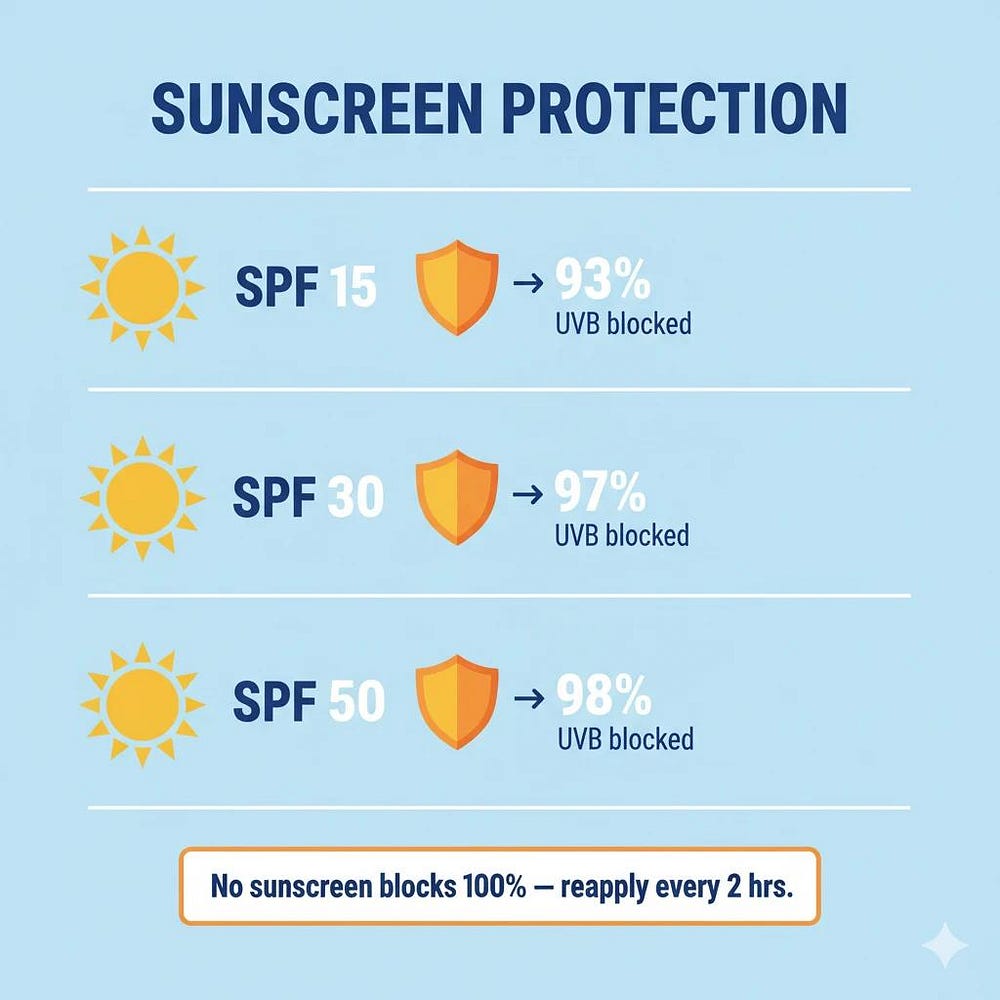
SPF 15
Blocks about 93% of UVB rays.
SPF 30
Blocks about 97% of UVB rays.
SPF 50
Blocks about 98% of UVB rays.
Higher SPF offers slightly more protection but still requires proper application and reapplication.
Types of Sunscreen
Mineral Sunscreen
Contains ingredients like zinc oxide and titanium dioxide that sit on the skin and reflect UV rays.
Best for:
- Sensitive skin
- Acne-prone skin
- Children
Pros
- Gentle on skin
- Works immediately
- Less likely to cause irritation
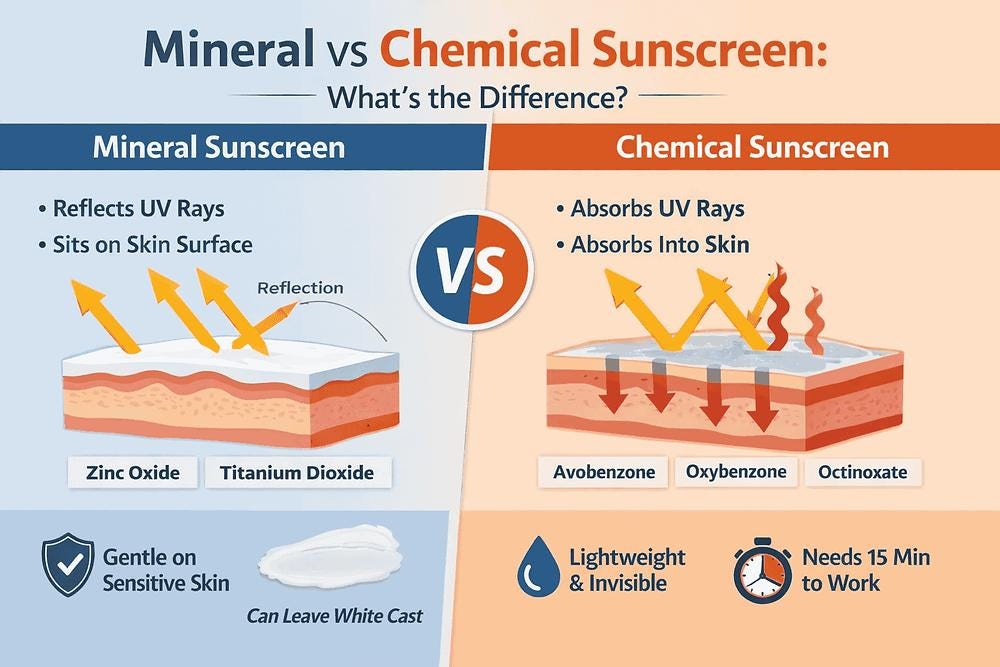
Chemical Sunscreen
Contains UV filters that absorb UV rays before they damage the skin.
Best for:
- Everyday wear
- Outdoor activities
Pros
- Lightweight
- Easy to blend
- No white cast
How to Apply Sunscreen Correctly
For maximum protection:
- Cleanse and moisturize your skin.
- Apply sunscreen as the final step of your skincare routine before makeup.
- Use approximately two finger lengths of sunscreen for your face and neck.
- Cover often-missed areas like ears, neck, eyelids, and the back of your hands.
- Apply 15–20 minutes before going outdoors (especially for many chemical sunscreens).
- Reapply every two hours, or after swimming, sweating, or towel drying.
Common Sunscreen Mistakes
- Skipping sunscreen on cloudy days
- Applying too little product
- Forgetting the neck and ears
- Not reapplying throughout the day
- Using expired sunscreen
- Assuming makeup with SPF provides enough protection
Do You Need Sunscreen Indoors?
Yes.
UVA rays can pass through windows and contribute to skin aging and pigmentation. If you spend time near windows or use screens throughout the day, daily sunscreen is still recommended.
How to Choose the Right Sunscreen
For Oily Skin
- Gel formulas
- Oil-free
- Matte finish
- Non-comedogenic
For Dry Skin
- Cream-based formulas
- Hydrating ingredients like hyaluronic acid or ceramides
For Sensitive Skin
- Mineral sunscreen
- Fragrance-free
- Alcohol-free
For Acne-Prone Skin
- Lightweight
- Non-comedogenic
- Oil-free
Can You Wear Sunscreen with Makeup?
Absolutely.
Apply sunscreen before foundation or other makeup products. You can also reapply during the day using sunscreen sprays, sticks, or powders designed for use over makeup.
Sunscreen Myths Debunked
Myth: Dark skin doesn’t need sunscreen.
Fact: All skin tones can experience UV damage and benefit from daily sun protection.
Myth: SPF 100 means all-day protection.
Fact: No sunscreen lasts all day. Reapplication is essential.
Myth: You only need sunscreen at the beach.
Fact: UV exposure happens during everyday activities like walking, driving, and sitting near windows.
Myth: Makeup with SPF is enough.
Fact: Most people don’t apply enough makeup to achieve the labeled SPF protection.
Daily Sunscreen Routine
Morning:
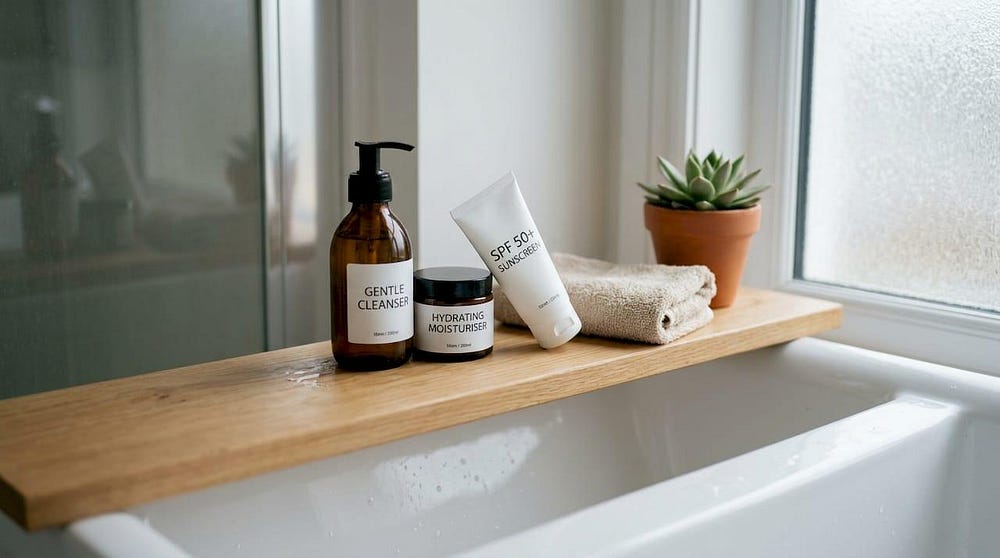
- Cleanser
- Serum (optional)
- Moisturizer
- Sunscreen (SPF 30 or higher)
- Makeup (optional)
Throughout the Day:
- Reapply sunscreen every two hours if you’re outdoors or after heavy sweating or swimming.
Final Thoughts
Healthy skin starts with consistent protection. Sunscreen is one of the simplest and most effective skincare products you can use to help prevent sunburn, reduce premature aging, minimize dark spots, and protect your skin from long-term UV damage.
Make sunscreen a non-negotiable part of your daily routine — rain or shine. Your future skin will thank you.
Frequently Asked Questions (FAQs)
Can I skip sunscreen if it’s cloudy?
No. Up to 80% of UV rays can penetrate clouds.
Is SPF 50 better than SPF 30?
SPF 50 offers slightly higher UVB protection, but proper application and reapplication matter more than choosing the highest SPF.
Should I apply sunscreen every day?
Yes. Daily use is recommended, even when you’re mostly indoors.
How often should I reapply sunscreen?
Every two hours when outdoors, and after swimming, sweating, or towel drying.
Can sunscreen help prevent dark spots?
Yes. Regular use helps prevent UV-induced pigmentation and supports a more even skin tone.


Comments
Post a Comment