15 Skincare Tips Dermatologists Love for Healthy, Glowing Skin
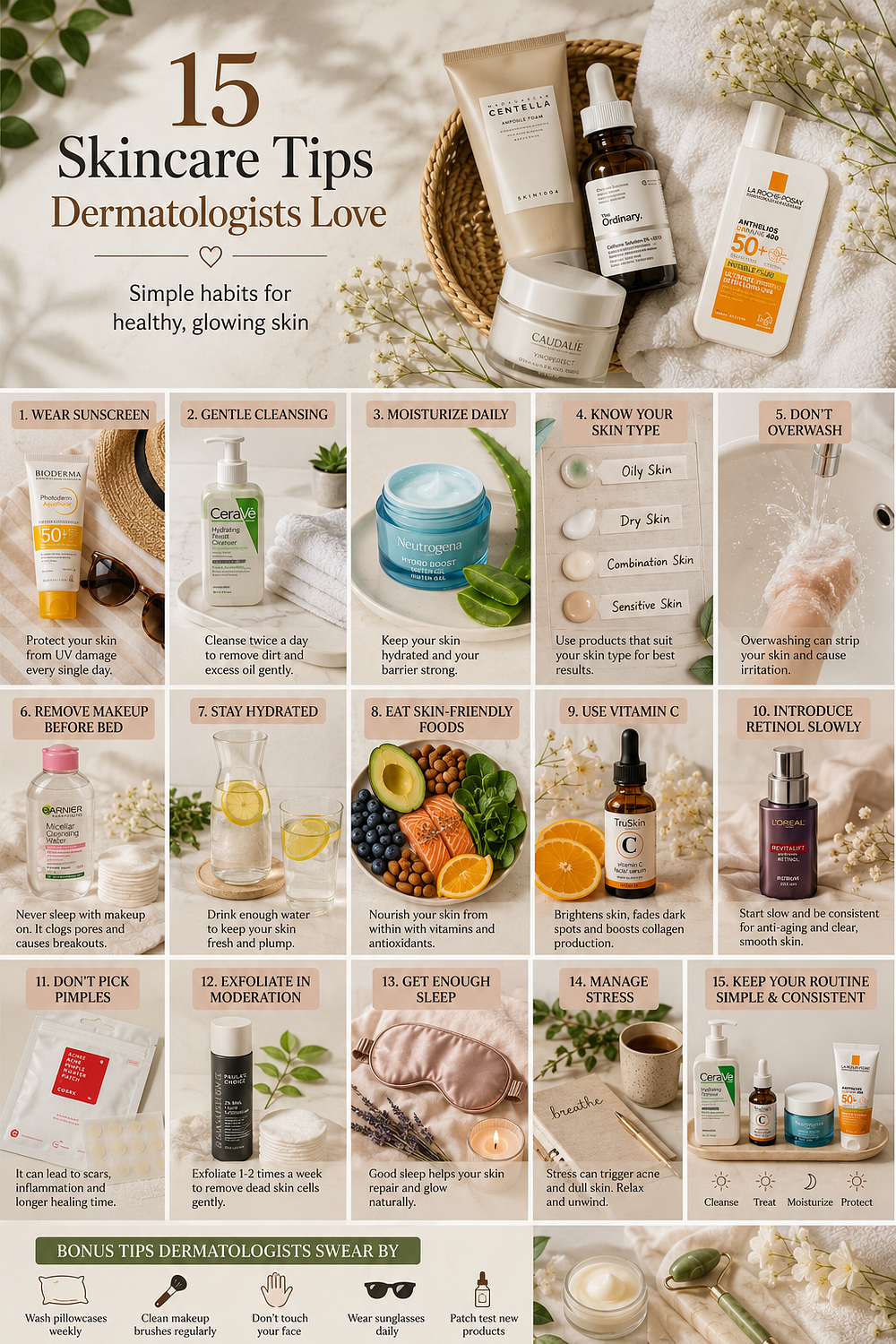
Everyone dreams of having clear, healthy, and radiant skin. While countless skincare products promise overnight results, dermatologists agree that beautiful skin starts with consistent habits — not expensive products. Following expert-approved skincare tips can help protect your skin, prevent premature aging, and keep your complexion looking its best.
In this guide, we’ll share 15 dermatologist-approved skincare tips that are simple, effective, and suitable for most skin types.
1. Always Wear Sunscreen
If dermatologists could recommend just one skincare product, it would be sunscreen.
UV rays are responsible for premature aging, dark spots, wrinkles, and even skin cancer. Applying sunscreen daily protects your skin regardless of the weather.
Choose a sunscreen that:
- SPF 30 or higher
- Broad-spectrum protection
- Water-resistant if spending time outdoors
Pro Tip: Reapply every two hours when outside.
2. Cleanse Your Face Gently
Washing your face removes dirt, excess oil, sweat, and makeup without stripping away natural moisture.
Avoid harsh scrubs or soaps that leave your skin feeling tight.
Dermatologists recommend:
- Cleansing twice daily
- Using lukewarm water
- Patting your face dry instead of rubbing
3. Moisturize Every Day
Hydrated skin looks healthier, smoother, and more youthful.
Even oily skin needs moisturizer.
Choose:
- Gel moisturizers for oily skin
- Cream moisturizers for dry skin
- Fragrance-free formulas for sensitive skin
Apply moisturizer immediately after washing your face to lock in hydration.
4. Know Your Skin Type
Using products designed for your skin type prevents irritation and improves results.
Common skin types include:
- Oily
- Dry
- Combination
- Sensitive
- Normal
Once you know your skin type, building an effective routine becomes much easier.
5. Avoid Overwashing
More cleansing doesn’t mean cleaner skin.
Overwashing removes your skin’s protective barrier and may lead to dryness, irritation, or increased oil production.
Twice a day is enough for most people.
6. Never Sleep with Makeup On
Sleeping with makeup clogs pores and traps oil, dirt, and bacteria.
This increases the risk of:
- Acne
- Blackheads
- Dull skin
- Irritation
Always remove makeup before bed using a gentle cleanser or cleansing balm.
7. Stay Hydrated
Drinking enough water supports your body’s overall health, including your skin.
While water alone won’t cure dryness, proper hydration helps maintain healthy skin function.
Aim for 6–8 glasses daily, depending on your activity level and climate.
8. Eat Skin-Friendly Foods
Healthy skin starts from within.
Dermatologists recommend eating foods rich in:
- Vitamin C
- Vitamin E
- Omega-3 fatty acids
- Zinc
- Antioxidants
Include foods like:
- Berries
- Spinach
- Salmon
- Nuts
- Avocados
- Citrus fruits
9. Add Vitamin C to Your Morning Routine
Vitamin C is one of the most recommended skincare ingredients.
Benefits include:
- Brightens skin
- Fades dark spots
- Protects against environmental damage
- Supports collagen production
Use Vitamin C serum before moisturizer and sunscreen.
10. Introduce Retinol Slowly
Retinol is considered the gold standard for anti-aging.
It helps:
- Reduce wrinkles
- Improve skin texture
- Treat acne
- Boost collagen
Start using it only 2–3 nights per week and always wear sunscreen during the day.
11. Don’t Pick Pimples
It may be tempting, but popping pimples can lead to:
- Scarring
- Infection
- Dark marks
- Longer healing time
Instead, use acne treatments containing salicylic acid or benzoyl peroxide.
12. Exfoliate in Moderation
Exfoliation removes dead skin cells and improves skin texture.
However, over-exfoliating damages the skin barrier.
Dermatologists suggest:
- 1–2 times per week for sensitive skin
- 2–3 times weekly for oily skin
Chemical exfoliants are generally gentler than harsh physical scrubs.
13. Get Enough Sleep
Your skin repairs itself while you sleep.
Poor sleep can contribute to:
- Puffy eyes
- Dull complexion
- Breakouts
- Fine lines
Aim for 7–9 hours of quality sleep each night.
14. Manage Stress
Stress affects hormones, often triggering acne, eczema flare-ups, and other skin concerns.
Simple stress-relief activities include:
- Meditation
- Yoga
- Walking
- Deep breathing
- Reading
Healthy skin is closely connected to mental well-being.
15. Keep Your Routine Simple and Consistent
One of the biggest mistakes people make is constantly switching products.
Dermatologists recommend following a simple routine consistently.
A basic routine includes:
Morning
- Gentle cleanser
- Vitamin C serum
- Moisturizer
- Sunscreen
Evening
- Cleanser
- Retinol (if suitable)
- Moisturizer
Consistency always delivers better results than chasing trends.
Bonus Tips Dermatologists Swear By
- Wash pillowcases every week.
- Clean makeup brushes regularly.
- Avoid touching your face.
- Wear sunglasses to protect the delicate eye area.
- Use a humidifier if your skin feels dry indoors.
- Patch-test new skincare products before applying them to your entire face.
Common Skincare Mistakes to Avoid
Even good products can cause problems when used incorrectly. Avoid these common mistakes:
- Skipping sunscreen
- Over-exfoliating
- Using too many active ingredients at once
- Ignoring your skin type
- Not moisturizing oily skin
- Sleeping with makeup on
- Changing products too frequently
Final Thoughts
Healthy skin isn’t about having a complicated 10-step routine — it’s about choosing products wisely and sticking with healthy habits. Dermatologists consistently recommend protecting your skin from the sun, keeping it hydrated, using gentle products, and being patient with your routine.
Remember, skincare is a long-term investment. Small, consistent steps every day can lead to healthier, smoother, and more radiant skin over time.
Start with these 15 dermatologist-approved tips, and your skin will thank you.
Frequently Asked Questions (FAQs)
1. What is the most important skincare tip according to dermatologists?
Daily sunscreen use is considered the most important step because it protects against premature aging, sun damage, and skin cancer.
2. How often should I wash my face?
Most dermatologists recommend cleansing twice a day — once in the morning and once before bed.
3. Can oily skin skip moisturizer?
No. Oily skin still needs hydration. Choose a lightweight, oil-free, or gel-based moisturizer.
4. At what age should I start using retinol?
Many people can start using retinol in their mid-20s to early 30s for prevention, or earlier if recommended for acne. Introduce it gradually and use sunscreen daily.
5. How long does it take to see skincare results?
Most skincare products take about 6–12 weeks of consistent use to show noticeable improvements.


Comments
Post a Comment